
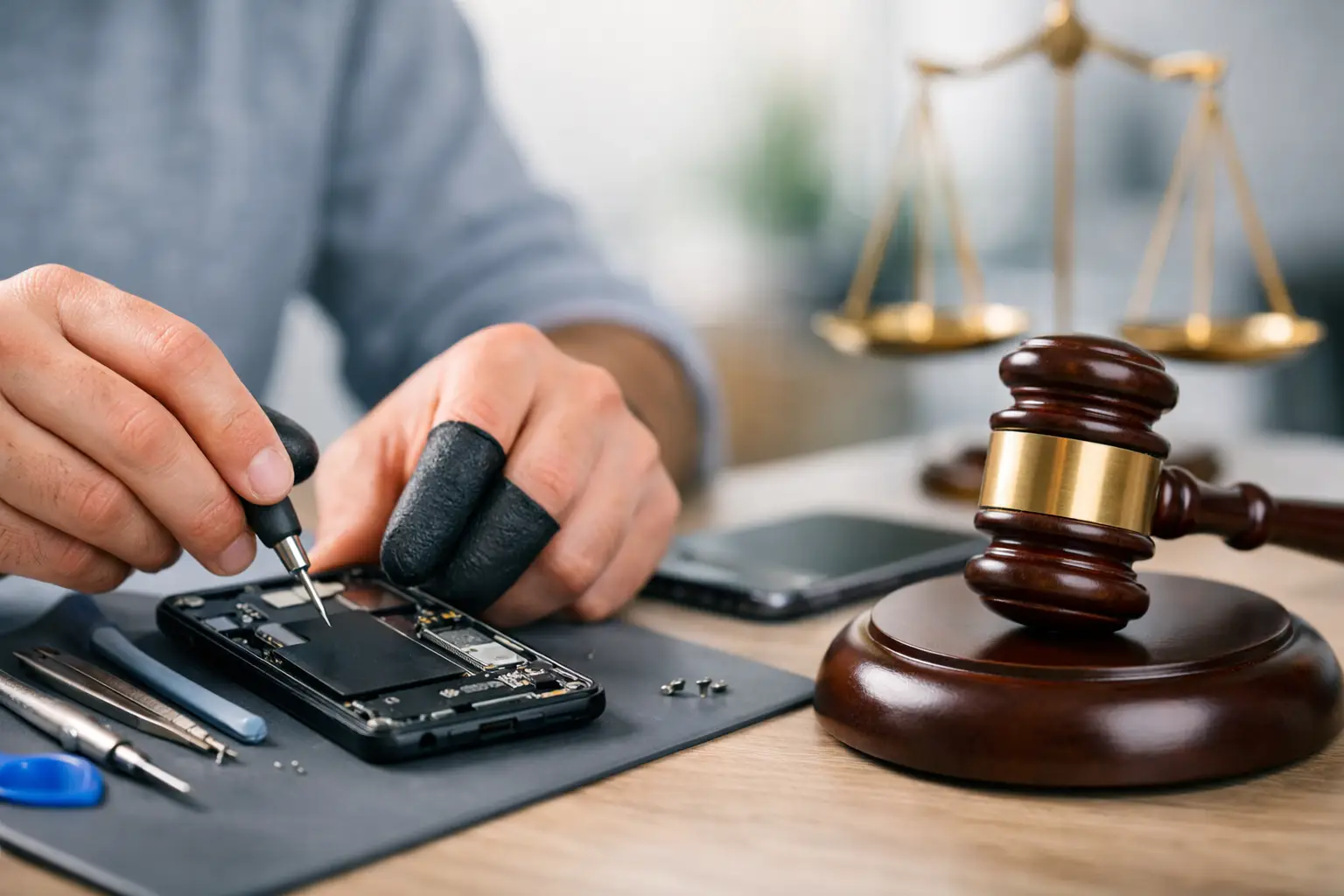
A cracked screen at 8 a.m. can turn into a work problem, a school problem, and a family problem before lunch. So, does phone repair void warranty coverage when you need help fast? Usually, no – not automatically. But the type of repair, the company that does it, the parts used, and the specific problem you later claim can all affect what the manufacturer will cover.
The smart move is not waiting weeks for a mail-in answer when your phone is unusable. It is understanding the warranty you have, getting a clear diagnosis, and choosing a repair shop that stands behind its work.
Does phone repair void warranty automatically?
No. In the United States, a manufacturer generally cannot cancel your entire warranty simply because an independent repair shop worked on your phone. Federal warranty law, commonly associated with the Magnuson-Moss Warranty Act, limits companies from requiring customers to use only the manufacturer or its authorized repair provider unless that service is provided free of charge.
That does not mean every later warranty claim will be approved. A manufacturer can deny coverage for damage it can reasonably connect to a third-party repair. For example, if an aftermarket battery causes swelling or a poor-quality screen installation damages a display connector, the manufacturer may refuse to cover that related issue.
The distinction matters. Your warranty is not usually wiped out because you repaired a cracked screen elsewhere. But the manufacturer may not cover a new problem caused by that repair, and it may decline to service a device with unauthorized modifications or damaged components.
What your warranty normally covers
Most manufacturer warranties cover defects in materials or workmanship for a limited period, often one year from purchase. They are meant for failures that happen under normal use, such as a battery that fails unusually early, a speaker that stops working without damage, or a phone that develops a hardware fault on its own.
They usually do not cover accidents. A dropped phone, liquid exposure, cracked glass, bent housing, lost device, or normal battery wear is commonly excluded even if your warranty is still active. That means many people with broken screens are not giving up free manufacturer coverage by choosing a local repair. They are paying for damage the original warranty would not have covered anyway.
Extended protection plans are different. AppleCare+, Samsung Care+, carrier protection, and similar plans may include accidental damage coverage for a service fee or deductible. Those plans can have stricter rules about where repairs must be performed and what parts are acceptable. Read the plan terms before booking a repair if you expect to use that coverage later.
When a third-party repair can affect coverage
The biggest risk is not the fact that a repair occurred. The risk is a connection between the repair and a future failure. If your phone needs a battery replacement and later develops an unrelated camera defect, the manufacturer may still need to evaluate that camera claim on its own merits.
However, coverage can get complicated in a few common situations.
The repair causes a new issue
A rushed or inexperienced repair can damage flex cables, seals, screws, antennas, face recognition hardware, fingerprint sensors, or the charging port. If the phone starts having problems after the repair, the manufacturer may say the repair caused the failure. A quality shop should test key functions before and after service and provide a warranty on its labor and replacement part.
The device has non-original or incompatible parts
Not all replacement parts are equal. Some aftermarket screens can affect brightness, color, touch response, refresh rate, fingerprint functionality, or software notifications. A low-grade battery may have weak capacity, inaccurate health reporting, or safety concerns.
A reputable repair provider should explain the part option before work begins. Ask whether the part is original, pulled from an original device, premium aftermarket, or an economy option. The best choice depends on your phone, your budget, and how long you plan to keep it.
Water resistance is affected
Many modern phones have water-resistance ratings when they leave the factory. Opening a phone for a screen, battery, camera, or charging-port repair can affect those seals. Even when a shop installs new adhesive and takes proper precautions, the original factory seal cannot always be guaranteed.
If water resistance is a major priority, ask directly how the shop handles perimeter adhesive, seals, and post-repair testing. More importantly, treat any repaired phone carefully around pools, sinks, rain, and high humidity. Water resistance is not the same as waterproofing, even on a brand-new phone.
The phone has been modified
Rooting an Android phone, jailbreaking an iPhone, installing unapproved firmware, or attempting a board-level repair without the right equipment can create separate warranty issues. These situations are more likely to trigger a denial because they can change how the device operates or make a failure difficult to diagnose.
Manufacturer warranty versus repair-shop warranty
These are two different protections, and both matter.
A manufacturer warranty covers qualifying defects from the device maker. A repair-shop warranty covers the specific repair, part, and labor supplied by the repair provider. If you replace a battery at an independent shop, the shop’s warranty should protect you if that replacement battery or the installation fails within its stated terms.
Before approving a repair, ask what the warranty covers, how long it lasts, and what is excluded. Damage from drops, liquid, misuse, or a separate defect is often excluded from repair coverage. That is normal. What you want is a shop that gives you a clear answer, documents the repair, and makes it right if its part or workmanship is the problem.
For customers who cannot afford downtime, this is often more useful than a vague promise. A good local repair warranty gives you a direct path back to the technician who worked on your device instead of another shipping label and another week without your phone.
How to protect yourself before any phone repair
Start by backing up your device. A screen or battery repair normally should not erase your data, but repairs involve handling delicate hardware, and no technician can guarantee the contents of a failing phone. Back up photos, messages, contacts, authenticator codes, and work files before service whenever possible.
Next, check whether you have an active manufacturer warranty, extended coverage plan, carrier insurance, or credit-card purchase protection. If the phone has a likely manufacturer defect and no accidental damage, filing a manufacturer claim may be your best first option. If the phone is badly cracked, will not charge, has water damage, or needs same-day help, an independent repair may make more sense.
Take photos of the device’s condition before handing it over. Remove your case, note any existing dents or display lines, and ask for a written estimate. You should also ask whether the shop tests charging, cameras, speakers, microphones, buttons, Wi-Fi, cellular signal, and biometric features after the repair.
Do not choose based on the lowest number alone. An unusually cheap repair can mean low-quality parts, no meaningful warranty, poor adhesive, or no recourse when something goes wrong. Fair pricing matters, but so do proven technicians, transparent part options, and a repair warranty you can actually use.
When an authorized repair is the better choice
An authorized provider is often the right call when your phone is still fully covered for a defect, when you have an active protection plan that requires authorized service, or when the repair involves specialized calibration and pairing. Newer flagship phones may have security components and features that require manufacturer tools to restore every function exactly as intended.
It can also be the better path if you want the best chance of maintaining original water-resistance specifications or you are preparing to trade the phone in through a manufacturer program with strict inspection standards. The trade-off is often cost, appointment availability, and turnaround time.
For accidental damage outside a protection plan, a qualified independent shop can be the practical choice. Reboot Hub serves Middle Georgia with fast diagnostics, same-day repair options, and a lifetime warranty on qualifying repairs, so you can address the broken screen or weak battery without making your phone unavailable for days.
Questions worth asking before you approve the repair
You do not need to become a phone technician. You just need clear answers. Ask what caused the issue, what part will be installed, whether the repair could affect water resistance or biometric features, how long the job will take, and what warranty comes with the work.
Also ask whether the repair provider has seen your model and failure before. A common iPhone screen replacement is different from a no-power issue caused by board damage, and a trustworthy shop will say when a repair needs deeper diagnostics rather than guessing.
A broken phone should not force you into a bad decision. If you know what your original warranty covers and choose a repair provider that is transparent about parts, testing, and warranty protection, you can get back to your day with far less risk.