
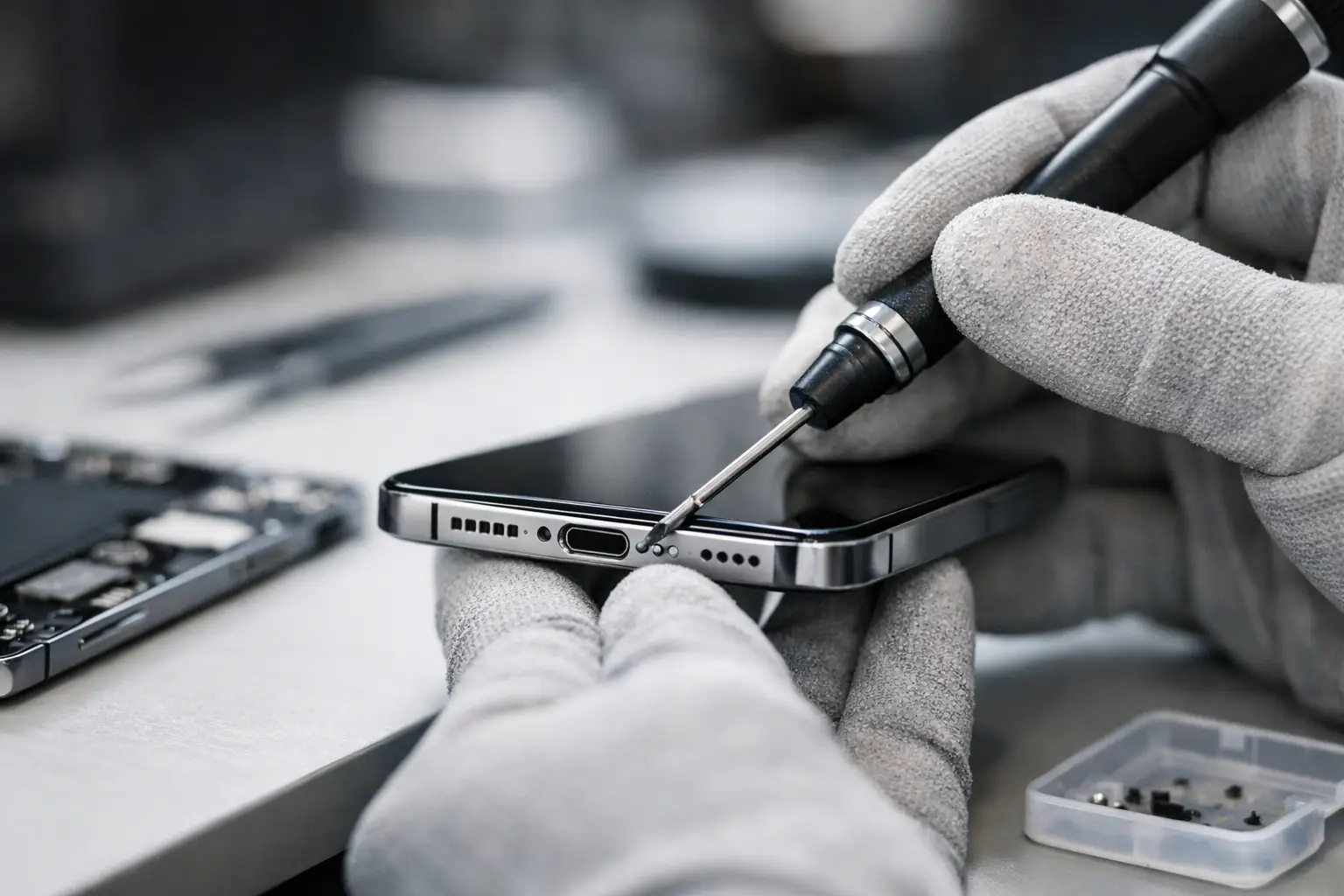
Your iPhone only charges if the cable is bent just right, held at an angle, or pressed in harder than it should be. That is the kind of problem people bring in every week, and an iphone charging port repair example makes it easier to see what is actually going wrong, what a real fix looks like, and when cleaning is enough versus when the port needs replacement.
For most people, the problem starts small. Charging becomes inconsistent. CarPlay cuts in and out. The phone connects to power, then disconnects a second later. You try a new cable, a new charging brick, and a different outlet, but the issue keeps coming back. At that point, the charging port is not just annoying – it is interfering with work, school, navigation, and basic communication.
A real iphone charging port repair example
Here is a common scenario. A customer comes in with an iPhone that will not charge unless the cable is pushed upward. Battery health is still decent, so the phone itself is not unusually weak. Wireless charging works, but wired charging is unreliable, and the customer also cannot connect consistently to a computer.
The first step is not replacing parts. A good shop tests the cable, charging block, and charging meter to confirm whether the phone is drawing power normally. In a lot of cases, pocket lint is packed tightly inside the port. That debris prevents the lightning connector from seating fully, which makes it look like the port is broken when it is really blocked.
If cleaning restores a firm connection and stable charging, that is the best-case result. It is faster, cheaper, and avoids unnecessary parts. But sometimes cleaning does not fix it. The port may have bent pins, corrosion, loosened internal contacts, or damage from repeated strain. That is when a charging port repair moves from a quick maintenance fix to a component-level repair.
What usually causes charging port failure
Charging ports wear out for simple reasons. Phones live in pockets, backpacks, cup holders, and on car dashboards. Dust and lint build up slowly, then compact down every time the cable is inserted. If someone yanks the cord out by the cable instead of the connector, the port takes extra stress. Cheap chargers can also create fit issues or unstable power delivery over time.
Water exposure is another major cause. Even a small amount of moisture can start corrosion inside the port. The phone may still work for a while, which makes the damage easy to ignore. Then charging problems show up days later.
There is also the possibility that the charging port is not the real problem. A failing battery, board-level fault, or charging IC issue can mimic a bad port. That is why diagnosis matters. If a shop skips testing and jumps straight to replacement, you can end up paying for the wrong repair.
How a proper diagnosis should work
A real repair starts with process, not guesswork. The technician should inspect the port under magnification, test charging behavior with known-good accessories, and confirm whether the device recognizes a cable consistently. If the phone draws erratic power or not enough current, that points toward a hardware issue.
They should also check for signs of liquid damage, impact damage, or frame bending. A bent housing can put pressure on internal components and create intermittent connection issues. On some models, the charging assembly includes other integrated parts, so the repair may involve more than just the visible port.
This is where speed and quality have to work together. Fast service is great, but only if the diagnosis is correct. A same-day repair done right beats a rushed repair that sends you back to the shop two days later.
What the repair itself may involve
In a straightforward case, the technician opens the phone, disconnects the battery, removes the damaged charging port assembly, installs the replacement part, and tests charging, data transfer, microphone function, and accessory connection before sealing the device back up.
The exact process depends on the iPhone model. On some models, the port assembly is more involved and sits alongside other small components, which means careful disassembly matters. On others, access is simpler, but adhesive, screws, and flex cables still require precision. This is not a repair where force solves anything.
If corrosion is present, the repair may take longer. The port might need replacement, but the board and nearby connectors also need inspection. If liquid damage spread beyond the port, a simple swap may not fully solve the issue. That is one of those it-depends situations customers should hear upfront.
When cleaning is enough and when replacement is smarter
A lot of charging issues are caused by debris. If the cable does not click in fully, cleaning is the first move. But if the port feels loose, the connection drops with slight movement, or the phone has already been cleaned without improvement, replacement is usually the better path.
There is also a practical question. If your phone only charges wirelessly, that may get you by for a while. But if you rely on wired charging in the car, use data transfer, or need dependable power during the day, a half-working port is not really working. Waiting often turns a manageable repair into a bigger inconvenience.
Cost, time, and what customers should ask
Charging port repair pricing varies by model and by what is actually wrong. Cleaning and minor debris removal should cost far less than replacing the port assembly. A full repair costs more, especially on models where labor is more involved, but it is still often much cheaper than replacing the phone.
Turnaround time matters too. For a lot of people, being without a phone for several days is not realistic. That is why same-day service is such a big deal for this kind of repair. If the parts are in stock and the issue is limited to the port, many repairs can be handled quickly.
Before handing over your phone, ask a few simple questions. Is this definitely the charging port? Will the technician test the phone before and after repair? Is there a warranty on the work? Those answers tell you a lot about the shop.
Why warranty and technician skill matter in an iphone charging port repair example
An iphone charging port repair example is not just about replacing a bad part. It is also about what happens after the repair. If charging works on the counter but fails again a week later, the repair was not really finished. A warranty gives customers some protection, but the bigger point is confidence in the work from the start.
Experienced technicians know the difference between a dirty port, a damaged flex assembly, and a deeper board issue. That keeps customers from spending money twice. It also means the phone gets tested the right way before it leaves the bench.
A strong warranty matters because charging issues can be intermittent. The phone may behave for a short time, then fail under normal daily use. Backing the repair shows the shop expects the fix to last.
What to do before you bring your phone in
Try a known-good Apple-certified or high-quality cable and charging block first. Check whether wireless charging works, if your model supports it. Look inside the port carefully, but do not jam metal tools into it. That can damage the pins and turn a cleaning job into a replacement.
If the phone has had any water exposure, mention it right away. If it only fails in the car but charges fine at home, say that too. Small details speed up diagnosis and help the technician spot whether the issue is accessory-related, port-related, or something deeper.
If you are in Warner Robins or nearby Middle Georgia and need the phone back fast, this is the kind of repair where local same-day service makes a real difference. Reboot Hub handles high-volume device repairs with certified technicians, a low-price guarantee, and a lifetime warranty, which is exactly what customers want when a phone they rely on every day suddenly stops charging.
The bigger takeaway from this repair
A bad charging port is one of those problems people tolerate longer than they should. They wiggle the cable, switch chargers, and hope it holds on a little longer. Sometimes the fix is simple. Sometimes the port needs replacement. Either way, the smart move is getting a proper diagnosis before the phone quits at the worst possible moment.
If your iPhone is already charging only when the cable sits at a weird angle, that is not a quirk. It is the warning sign.