
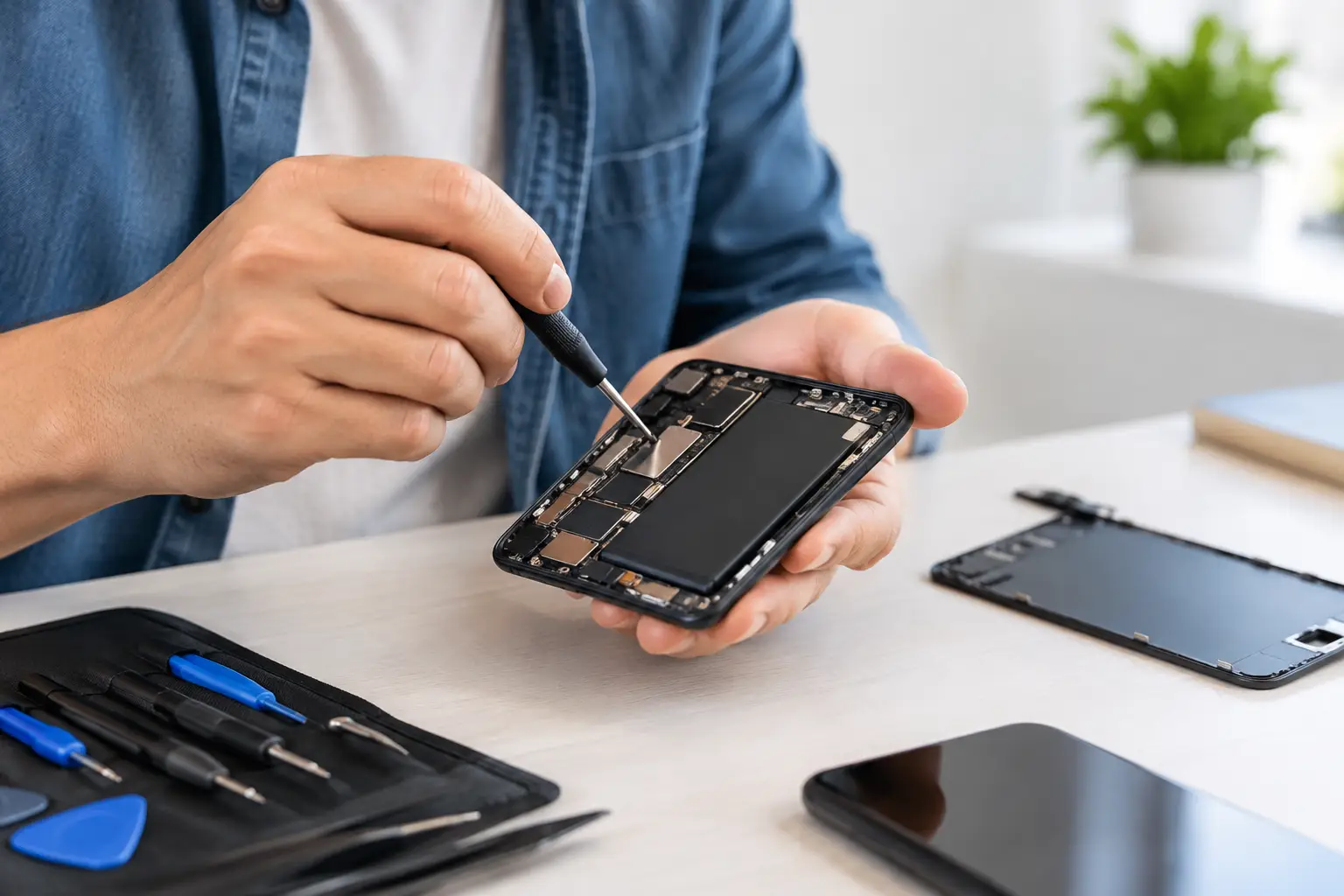
A cracked iPhone screen before work, a PS5 with no picture before the weekend, or a laptop battery that dies halfway through class creates the same problem: you need your device back, fast. Right to repair is about whether you have a real choice in how that happens – through the manufacturer, a qualified local repair shop, or, in some cases, your own hands.
For most people, this is not a political talking point. It is the difference between paying for a practical repair and being pushed toward an expensive replacement. It affects how quickly parts can be sourced, whether a technician can run proper diagnostics, and whether a device that should have years left can stay in service.
What right to repair actually changes
Right to repair is the idea that device owners and independent repair professionals should be able to access the parts, tools, repair manuals, and diagnostic information needed to fix products they own. That includes phones, tablets, computers, game consoles, smartwatches, appliances, vehicles, and more.
The key word is choice. A manufacturer can still offer its own repair service. It can still set standards for its parts and warranty work. But customers should not be left with one slow, costly option when a repair can be completed safely by a qualified independent technician.
It does not mean every repair should be DIY
Some repairs are simple enough for an experienced owner with the right tools. Others are not. Modern electronics are tightly packed, use fragile connectors, and often require calibration after a part is replaced. A swollen battery, liquid-damaged phone, failed charging circuit, or console HDMI port is not a good first project for most people.
Right to repair does not require you to repair your own device. It gives you the freedom to decide who repairs it. For customers, that often means faster turnaround, clearer pricing, and an option close to home rather than mailing a device away for days or weeks.
Why repair choices matter when your device fails
When a phone stops charging or a tablet screen breaks, replacement can sound easy until you add up the full cost. A new device may require a large upfront payment, a trade-in that is worth less because the old device is damaged, new accessories, data transfer, and time spent setting everything back up.
A repair can be the smarter value when the device is otherwise working well. Screen replacements, battery replacements, charging port repairs, speaker repairs, and many board-level issues can extend a device’s useful life substantially. The right answer depends on the model, age, condition, and cost of the repair, but replacement should not be the automatic default.
Downtime is the other cost people often overlook. Your phone may be your work line, navigation, school tool, camera, payment method, and connection to family. A gamer with a damaged HDMI port does not just have a broken console – they have a system that cannot connect to the screen at all. A small business owner with a dead phone may miss customer calls every hour it is out of service.
That is why repair access matters. More available parts and better diagnostic support give capable shops a chance to solve problems quickly instead of simply declaring a device unrepairable.
Right to repair and your warranty
A common fear is that using an independent repair shop automatically voids a device warranty. In most cases, it is not that simple. A manufacturer generally cannot cancel an entire warranty just because you had a screen, battery, or other component repaired elsewhere.
There is an important trade-off, though. If an outside repair causes damage or uses a part that creates a new issue, the manufacturer may decline coverage for that related problem. Also, some devices use software pairing or calibration systems that can affect features after certain repairs if the correct procedures are not followed.
This is why the cheapest quote is not always the best deal. Ask what type of part is being used, whether functionality will be tested after repair, and what warranty the shop provides on its labor and parts. A repair should restore daily use, not create a second problem a week later.
Parts and diagnostics are where the fight gets real
Most customers see the visible damage: a shattered screen, a bent charging port, a camera that will not focus. Technicians often need to look deeper. Is the battery failing, or is the charging circuit on the board damaged? Is there no signal because of the carrier, a SIM issue, a damaged antenna, or liquid corrosion? Is a console showing no image because of the cable, the HDMI port, or a board-level fault?
Without access to reliable diagnostic tools, repair information, and quality replacement parts, even skilled technicians are forced to guess. That raises costs and slows repairs. Better repair access means a more accurate diagnosis from the start, which is good for customers and good for the device.
It also separates real repair from part swapping. Replacing a screen or battery is valuable work, but advanced microsoldering can save devices with damaged connectors, failed circuits, or liquid-related board issues that would otherwise be written off. Not every shop offers board-level repair, and not every device is worth that level of work. Still, customers deserve an honest assessment before being told replacement is their only option.
How to choose a repair option that makes sense
If you are comparing manufacturer service, mail-in service, and a local shop, focus on the details that affect your time and money. A good repair provider should be able to explain the issue in plain language and give you a realistic timeline.
Ask these questions before handing over your device:
- What is the total price, including parts, labor, and any diagnostic fee?
- How long will the repair take, and is same-day service realistic for this issue?
- What kind of replacement part will be used?
- What warranty covers the repair, and what does it exclude?
A clear answer to those questions matters more than a vague promise or an unusually low advertised price. For straightforward issues, a qualified shop may complete the job quickly. For liquid damage, motherboard trouble, or devices with hard-to-source parts, a longer diagnostic process may be necessary. Fast service is valuable, but accurate service is what prevents repeat repairs.
Right to repair in the real world
For someone searching for iPhone screen repair in Warner Robins, the right to repair conversation becomes very practical. You should be able to choose a nearby repair option that fits your schedule, budget, and device condition instead of losing access to your phone for an open-ended amount of time.
Reboot Hub has completed more than 50,000 repairs since 2011 because customers need that kind of choice: a shop that can diagnose the problem, repair common issues quickly, handle tougher board-level work when possible, and stand behind the result with a lifetime warranty. A fast repair is not just convenient when your device is essential to work, school, or family life. It can prevent a manageable problem from becoming an unnecessary replacement purchase.
When replacement is the better call
Repair is not always the best financial decision. A very old device with multiple failures, significant frame damage, limited software support, or a repair estimate close to the price of a newer replacement may be better retired. Severe liquid damage can also create uncertainty because corrosion sometimes causes additional failures after the first issue is fixed.
A trustworthy technician should say that plainly. The goal is not to repair every device at any cost. The goal is to give you enough information to make a fair decision. If repair is worthwhile, you should have access to it. If it is not, you should know why before spending money.
Your device is yours. When it breaks, you deserve a real diagnosis, a fair price, and a repair path that respects both your time and your budget. Start with the condition of the device and the quality of the repair option in front of you – then choose the solution that gets your life moving again.