
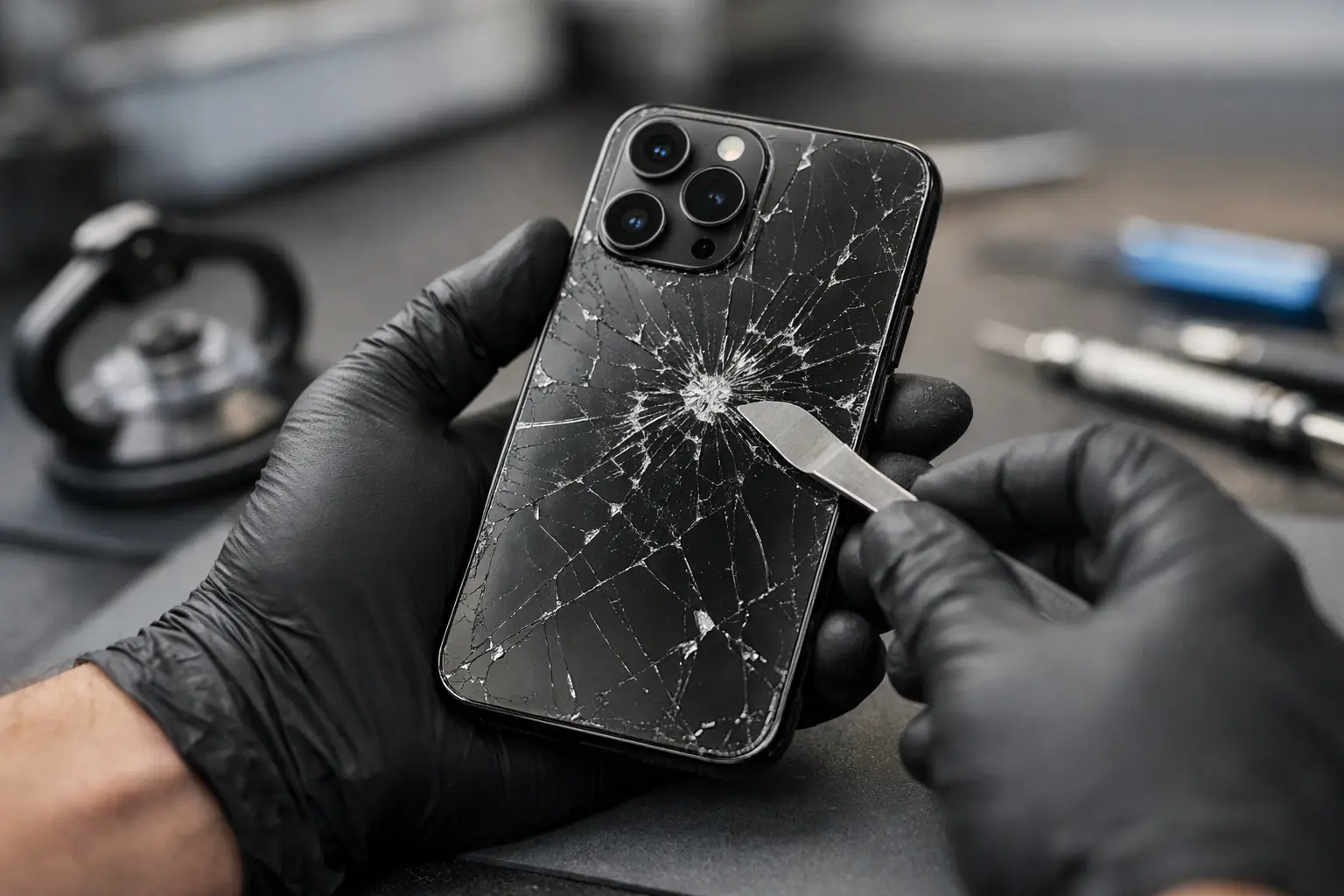
That first crack on the back of your phone usually feels harmless. The screen still works, calls still come through, and the damage seems cosmetic – until the glass starts spreading, flakes get sharp, and your phone stops feeling safe to hold. If you’re wondering how to fix cracked back glass, the real answer depends on how bad the damage is, what phone you have, and whether you want a quick patch or a proper repair.
Back glass damage sits in a tricky category. It looks less urgent than a broken display, but it can still lead to bigger problems. Cracks create openings for dust, moisture, and pressure points around the camera housing, charging coil, and frame. On many newer phones, especially premium iPhones and Samsung devices, the back glass is bonded in a way that makes repair harder than most people expect.
How to fix cracked back glass without making it worse
The biggest mistake people make is treating back glass like a simple peel-and-replace part. On some devices, it is not. The glass may be glued tightly over internal components, and on certain models the repair requires heat, precision tools, laser separation, or full housing replacement.
If the crack is small and you need a short-term way to use the phone safely, a temporary fix can help. A case can prevent loose shards from falling out and protect your hand from sharp edges. A strong protective skin or clear packing-style film can also hold the broken pattern in place for a little while. That does not repair the damage, but it can buy you time.
If the back glass is lifting, missing chunks, or splintering near the camera, stop there. Temporary patches are no longer enough. At that point, the goal is to prevent internal damage, not just cover the crack.
When DIY back glass repair makes sense
There are a few cases where a do-it-yourself approach is reasonable. If you own an older phone with a removable or easier-to-access rear panel, have experience with electronics repair, and already understand adhesive removal, you may be able to replace the back safely.
The catch is that many people search how to fix cracked back glass expecting a simple at-home project. For modern smartphones, it often is not. You need the right replacement part, adhesive, precision tools, heat control, and enough patience not to damage nearby components. Wireless charging coils, NFC hardware, camera lenses, flash modules, and flex cables can all be affected during removal.
DIY also makes less sense when the phone is still valuable. Saving a little money upfront can backfire if the camera stops focusing, the seal fails, or the frame bends during repair. Then you’re paying for a larger fix than you started with.
What a real back glass repair usually involves
A proper repair is more than removing broken pieces and sticking on a new panel. The damaged glass has to come off cleanly. Adhesive residue needs to be fully removed. The frame has to be checked for bends or warping. The camera ring and lens area need inspection. Then the new back has to be aligned correctly and secured with the right adhesive.
That matters because poor alignment can affect fit, finish, and protection. If the camera opening sits even slightly off, photos may look hazy or the lens can stay exposed to dust. If adhesive is weak or uneven, the back may lift over time, especially in hot cars or pockets with constant pressure.
On some devices, technicians choose between replacing only the glass or replacing the entire housing. Glass-only repair can be more cost-effective, but it depends on the model and condition of the frame. Housing replacement may take more labor or parts cost, but in some cases it delivers a cleaner, longer-lasting result. This is one of those situations where it depends.
Signs your cracked back glass needs professional repair now
Not every cracked phone needs same-hour service, but some do. If you notice any of the following, it is smart to stop using DIY patches and get the phone checked:
- Glass splinters are coming loose
- The camera lens area is cracked or exposed
- Wireless charging is inconsistent
- The phone has been dropped again after the original crack
- The frame looks bent or separated
- You see fogging, dust, or moisture under the camera glass
Those symptoms can point to more than surface damage. What looks like a cosmetic issue can turn into charging trouble, camera failure, or moisture intrusion.
Can you use glue to fix cracked back glass?
Technically, you can glue broken glass down. Practically, that is where many repair attempts go sideways.
Household glue is not made for phone repair. It can seep into openings, fog camera areas, interfere with future repair, and create an uneven bond. Even stronger adhesive products can cause problems if they are applied without controlling pressure and placement. More glue does not mean a better repair.
If the goal is to keep the phone usable for a day or two, a case is safer than experimenting with glue. If the goal is a permanent fix, replacing the damaged back is the better path.
Why cracked back glass is more than a cosmetic problem
A lot of people keep using a phone with a shattered back because the front screen still looks perfect. That is understandable, but the rear glass does more than make the phone look nice.
On many models, the back helps protect internal components and supports the overall structure of the device. Once cracked, that protection is reduced. Pressure from sitting, dropping, or even gripping the phone tightly can spread the damage. Sharp edges can also get worse over time, especially if the phone goes in and out of pockets, backpacks, or cup holders all day.
There is also the resale issue. A phone with cracked back glass loses value fast, even if it works fine otherwise. If you ever plan to trade it in or sell it, fixing the back sooner usually puts you in a better position.
How repair shops handle cracked back glass faster
Speed matters when your phone is your wallet, GPS, work line, and camera. A good repair shop starts by confirming the model, checking whether the damage is limited to the back glass, and spotting any hidden issues around the frame or camera. That upfront inspection is what keeps a simple repair from turning into guesswork.
From there, an experienced technician uses the right process for that specific device, not a one-size-fits-all method. Some phones need careful heat and separation. Others are better candidates for full rear housing replacement. The benefit of professional repair is not just the part – it is knowing which repair path gives you the best result for your phone and your budget.
That is especially important if you rely on wireless charging, use a premium device, or want the repair to hold up long-term. Fast matters, but clean work matters too.
How to fix cracked back glass and know if it’s worth it
The best way to decide is to compare repair cost against the value of the phone, the severity of the crack, and how long you plan to keep the device. If you have a newer phone in otherwise good shape, back glass repair is usually worth it. It protects the device, restores the look, and helps preserve resale value.
If the phone already has multiple issues – bad battery, damaged frame, charging problems, camera trouble – the smarter move may be to repair everything at once or consider trading the device in as-is. Again, it depends on the numbers.
For many people, the sweet spot is simple: if the phone still has life left and the damage is isolated to the back, repair it now before it becomes more expensive.
The safest next step
If your phone’s back glass is cracked but still intact, keep it in a case and avoid another drop. If shards are loose, the camera area is affected, or the phone is starting to show other symptoms, get it repaired before a cosmetic issue turns into a hardware problem.
At Reboot Hub, this is the kind of repair we see every day. People come in thinking the back glass is just ugly, then find out it is one drop away from something worse. A fast, professional fix usually costs a lot less than replacing the whole phone – and it gets your device back to feeling normal again.
A cracked back does not always need panic, but it does need a smart decision. The sooner you deal with it, the more options you usually have.