
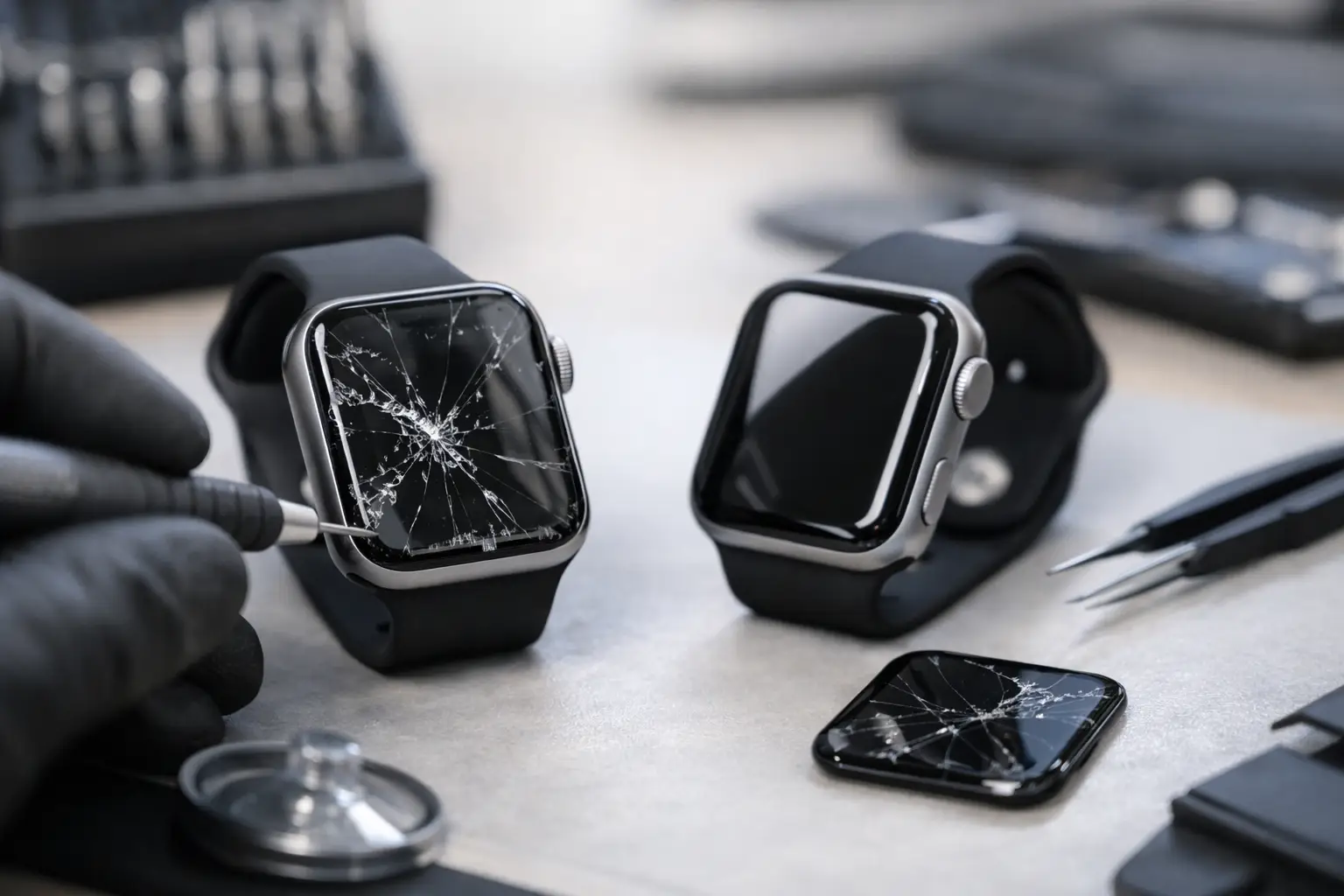
A cracked Apple Watch changes how you use it right away. Taps stop registering where you need them, tiny shards can catch your finger, and what started as cosmetic damage can turn into moisture, touch, or display failure. That is why apple watch screen repair is usually a time-sensitive decision, not something to put off for a few weeks.
The bigger question is not just can it be fixed. It is whether fixing it makes financial sense, how quickly it should be done, and what kind of repair actually solves the problem instead of creating a second one.
When apple watch screen repair makes sense
If the watch still powers on, the touchscreen mostly works, and the damage is limited to the glass or display assembly, repair is often the smarter move than replacement. For many people, the Apple Watch is tied to workouts, notifications, calls, Apple Pay, and daily routines. Replacing the entire device costs a lot more than repairing a damaged screen, especially on newer models.
That said, it depends on the model, the extent of damage, and whether there are signs of deeper issues. A simple crack is one thing. A lifted screen, black display, green lines, battery swelling, water exposure, or a case that is bent from impact can change the repair path fast.
On older models, there is a practical limit. If the repair cost gets too close to the value of the watch, replacement may be the better use of your money. On newer models, especially cellular versions or larger sizes, repair usually has a stronger case because the replacement cost climbs quickly.
What a cracked Apple Watch screen can lead to
A lot of people wait because the watch is still usable. That is understandable, but cracked glass rarely stays the same for long.
Apple Watch displays are compact and tightly assembled. Once the surface is compromised, sweat, dust, pocket lint, lotion, and moisture have an easier path inside. What looks like a light crack can eventually affect touch response, brightness, haptics, sensors, or battery performance. If the adhesive seal is broken, normal daily wear becomes riskier.
There is also the issue of pressure. Watches get bumped against door frames, gym equipment, desks, countertops, and car interiors all day. One more hit can turn a repairable screen into a full display failure.
Screen glass vs full display repair
This is where people often get confused. They say the glass is cracked, but on an Apple Watch, repair usually involves more than swapping a top layer like on some older devices.
In many cases, the screen assembly is replaced as a unit. That is because the display and touch components are closely integrated, and separating them without damaging the panel takes specialized equipment and a high tolerance for risk. A low-cost quote that sounds too good can mean corners are being cut, lower-grade parts are being used, or the repair is not addressing the full issue.
A proper repair should restore visibility, touch function, and screen fitment while preserving the device’s basic usability. The quality of the adhesive seal and the technician’s handling matter a lot on a smartwatch because there is very little room for error.
What affects Apple Watch screen repair cost
There is no one-price-fits-all answer, and anyone pretending there is probably has not looked at your exact watch.
Model matters first. A newer Series watch, SE, Ultra, GPS version, or cellular version can all affect parts cost and repair complexity. Screen size matters too. Condition matters just as much. If the display is only cracked but still working, that is one scenario. If the screen is detached, the OLED is damaged, the housing is bent, or the battery is pushing against the display, the job is different.
Parts quality also affects price. You can usually find a cheaper option somewhere, but lower prices often come with trade-offs in brightness, touch sensitivity, fit, durability, or warranty support. If you wear your Apple Watch every day, it usually makes more sense to pay for a repair that feels right and lasts.
Turnaround time can be a factor too. Some shops handle smartwatch work in-house. Others send it out or make you wait on parts. If the watch is part of your daily routine, speed matters more than people think.
Signs you should stop using the watch until it is repaired
Some cracked watches are annoying but stable. Others should be shut down and looked at as soon as possible.
If the screen is lifting, if you see flickering or dark spots, if touch is registering on its own, or if the watch gets unusually warm, stop wearing it. A lifted display can point to impact damage or battery swelling, and that is not something to ignore. If the watch was exposed to water after the screen cracked, there is also a higher chance of internal damage even if it still seems fine at first.
Another red flag is a deep crack near the edges. Edge damage is where seals fail fastest and where impact stress often spreads into the body of the watch.
Choosing the right repair shop
Apple Watch repair is not the same as basic phone screen replacement. The parts are smaller, the adhesive work is more delicate, and the margin for mistakes is tighter.
A good repair shop should be clear about what is being replaced, how long the repair takes, and what warranty comes with the work. They should also be upfront if the watch has additional issues that could affect the outcome. That kind of honesty matters. Nobody wants a quick quote that turns into a vague explanation after the device is already on the bench.
This is where local repair has a real advantage over mail-in service. You can ask questions, get a real diagnosis, and know where to go if you need support after the repair. For customers around Warner Robins and Middle Georgia, that convenience is not a small thing when the goal is to get your device back fast and working right.
Fast repair matters more than people expect
A smartwatch feels optional until it is not. If you use it for workouts, work alerts, texts, calendar reminders, or quick calls, a broken screen becomes daily friction.
That is why turnaround should be part of the value, not an afterthought. A lower price does not help much if the watch sits for a week waiting on a shipment or comes back with touch issues. The best repair experience is simple: clear diagnosis, fair price, quality parts, and a fast return to normal use.
That is the standard customers are really looking for. Not just a repaired screen, but less downtime and less hassle.
Is DIY Apple Watch screen repair worth it?
For most people, no.
Apple Watch repair is one of those jobs that looks manageable in a short video and gets expensive fast when something goes wrong. The screen is small, the adhesive is stubborn, and internal components are easy to damage. Even opening the watch without causing extra problems takes experience.
If you already have specialized tools and know how to work on compact wearables, that is one thing. For the average owner, DIY usually risks turning a cracked screen into a dead watch. Once that happens, the savings disappear.
Repair now or wait?
If the crack is minor and the watch is still fully functional, you may have a little time. But waiting is still a gamble. Every workout, accidental splash, and bump against a hard surface increases the chance that a straightforward repair turns into a more expensive one.
If the watch has visible separation, touch problems, display damage, or any sign of heat or swelling, waiting is the wrong move. Get it checked before the damage spreads.
A cracked Apple Watch does not always mean you need a new one. Often, it means you need a precise repair done quickly and done right. The smart move is to treat screen damage early, ask the right questions, and choose a shop that values speed, fair pricing, and warranty-backed work as much as you do.