
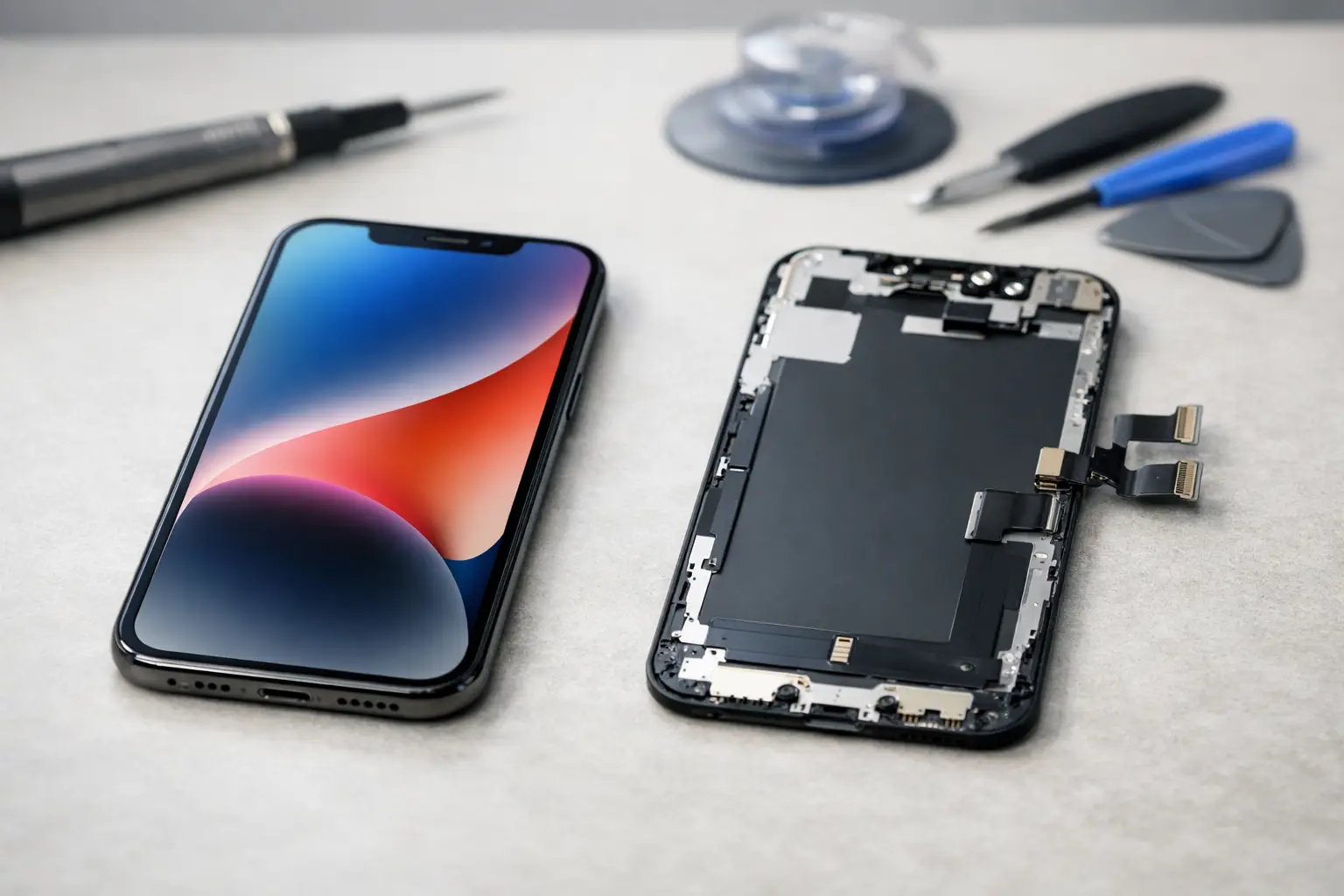
Cracked your iPhone and got hit with two repair prices? That usually means you’re looking at oem vs aftermarket iphone screens. The cheaper quote is tempting, but the screen you choose affects more than looks. It can change brightness, touch response, battery use, durability, and how your phone feels every time you pick it up.
If you just want the simple version, here it is: OEM screens are closer to what Apple originally installed. Aftermarket screens vary a lot. Some are decent. Some are frustrating from day one. The right choice depends on your phone, your budget, and how picky you are about display quality.
OEM vs aftermarket iPhone screens: what’s the difference?
OEM means Original Equipment Manufacturer. In plain English, that means a screen made to the same standard as the original part your iPhone came with. In repair conversations, OEM usually refers to an original pull or a premium original-spec replacement, depending on the shop and the model.
Aftermarket means the screen was made by a third-party manufacturer, not the original supply chain. That does not automatically mean bad. It means quality can range from surprisingly solid to obviously cheap.
That range is what trips people up. Two shops may both say “aftermarket,” but one may be using a high-grade hard OLED while another is installing the lowest-cost LCD available. Those are not the same repair, even if the invoice uses similar wording.
Why the screen choice matters more than most people expect
A lot of customers assume a screen is just a piece of glass with a picture behind it. Once the phone powers on, they think the job is done. In real use, that’s not how it works.
Your iPhone screen is where you notice every flaw. If brightness is weak, you’ll fight it outside. If touch calibration is off, typing feels annoying. If color is wrong, photos look flat or overly blue. If the panel draws more power, your battery may seem worse even if your battery is still healthy.
That’s why screen replacement is one of those repairs where the part quality matters almost as much as the install itself.
How OEM screens usually perform
An OEM-quality screen is usually the closest match to the original viewing experience. You can expect better color accuracy, more natural brightness, smoother touch response, and a more consistent fit in the frame.
On OLED iPhones, this difference can be especially noticeable. Deep blacks, contrast, and overall sharpness tend to look better on OEM or high-end original-spec parts. The screen also generally feels more like the phone you had before it cracked, which matters if you use your device all day for work, school, streaming, maps, or social media.
Durability is part of the equation too. A better-built screen is less likely to develop issues like dead spots, flickering, ghost touch, or weak backlighting shortly after installation.
The downside is price. OEM-type parts almost always cost more. If your main goal is to get the phone working again for the lowest possible amount, OEM may feel like more than you want to spend.
How aftermarket iPhone screens compare
Aftermarket screens exist because not everyone wants or needs the highest-tier part. For many people, a solid aftermarket screen is the difference between repairing a phone and replacing it.
A good aftermarket screen can be a smart value. If the phone is older, if you plan to trade it in later, or if it’s a backup device for a teen or family member, spending less may make perfect sense.
But this is where honesty matters. Aftermarket parts are not equal. Some look good indoors and struggle in sunlight. Some have slightly different color temperature. Some feel a little less responsive at the edges. Some use more battery. And on certain models, low-end aftermarket screens can make a premium phone feel noticeably less premium.
That doesn’t mean you should avoid aftermarket every time. It means you should ask what grade of part is being installed, not just whether it’s “OEM or aftermarket.”
The biggest differences people actually notice
Most customers do not compare screens with lab equipment. They notice the practical stuff.
Brightness is usually one of the first things people catch. Lower-grade aftermarket panels can look dim outside or lose detail in bright conditions. Color is another common giveaway. Whites may look cooler or warmer than normal, and blacks may look more gray on non-OLED replacements.
Touch is where frustration builds fast. If you text a lot, play games, scroll constantly, or use your phone for work, even a small drop in responsiveness gets old quickly. Fit and finish matter too. A screen can technically work but still sit slightly off, feel different under your finger, or not match the original glass quality.
For some users, those differences are minor. For others, they are the whole point.
When OEM is worth the extra money
If you have a newer iPhone, OEM-quality is usually the safer choice. The more expensive the phone, the more obvious a weak replacement screen feels.
It also makes sense if you care about display quality, use your phone heavily for business, or simply want it to feel right after repair. If your screen is something you stare at for six to eight hours a day, saving a little upfront can feel less impressive after weeks of irritation.
OEM is often the better fit when you plan to keep the device for a while. A better part can mean fewer repeat issues and a better overall ownership experience.
When aftermarket makes sense
Aftermarket is often the practical move for older iPhones. If the phone is already a few years old, putting the highest-priced screen on it may not always be the smartest use of money.
It can also be the right choice if you need a fast repair and need to stay on budget. A well-selected aftermarket screen from a reputable shop can get your phone back in action without forcing you into replacement pricing.
This is especially true for parents fixing a teen’s phone, customers repairing a secondary device, or anyone trying to extend a phone’s life for another year. In those cases, value matters just as much as perfect screen performance.
Questions you should ask before approving the repair
You do not need to be a technician to avoid a bad screen repair. You just need to ask a few direct questions.
Ask whether the replacement is OEM, refurbished original, soft OLED, hard OLED, or LCD if your model originally used OLED. Ask whether True Tone can be restored. Ask what warranty covers the screen and whether that warranty includes touch failure, display failure, or defects beyond the glass itself.
Most important, ask how the phone will feel compared to original. A good shop should be able to answer that clearly, without dancing around it.
A cheap screen can get expensive later
The lowest quote is not always the lowest-cost repair. If a screen has poor touch response, weak brightness, or fails early, you are paying twice – once for the part, and again in frustration, downtime, or replacement.
That’s why experienced repair shops focus on matching the part to the customer, not just winning on price alone. Sometimes the budget option is absolutely fine. Sometimes paying more upfront saves money and headaches later.
At Reboot Hub, that conversation matters because speed only helps if the repair also holds up. A fast screen replacement should still feel good in your hand a week later, a month later, and beyond.
The real answer on OEM vs aftermarket iPhone screens
There is no universal winner for every customer. OEM is usually better in quality, consistency, and overall feel. Aftermarket can be the better value when the phone is older or the budget is tight. The key is knowing what you are trading for the lower price.
If a shop cannot explain those trade-offs clearly, that’s your sign to keep asking questions. A good repair is not just about getting the crack gone. It’s about getting your phone back in a way that fits your budget, your expectations, and how you actually use it every day.
When you choose the right screen the first time, the repair feels simple. That’s exactly how it should be.