
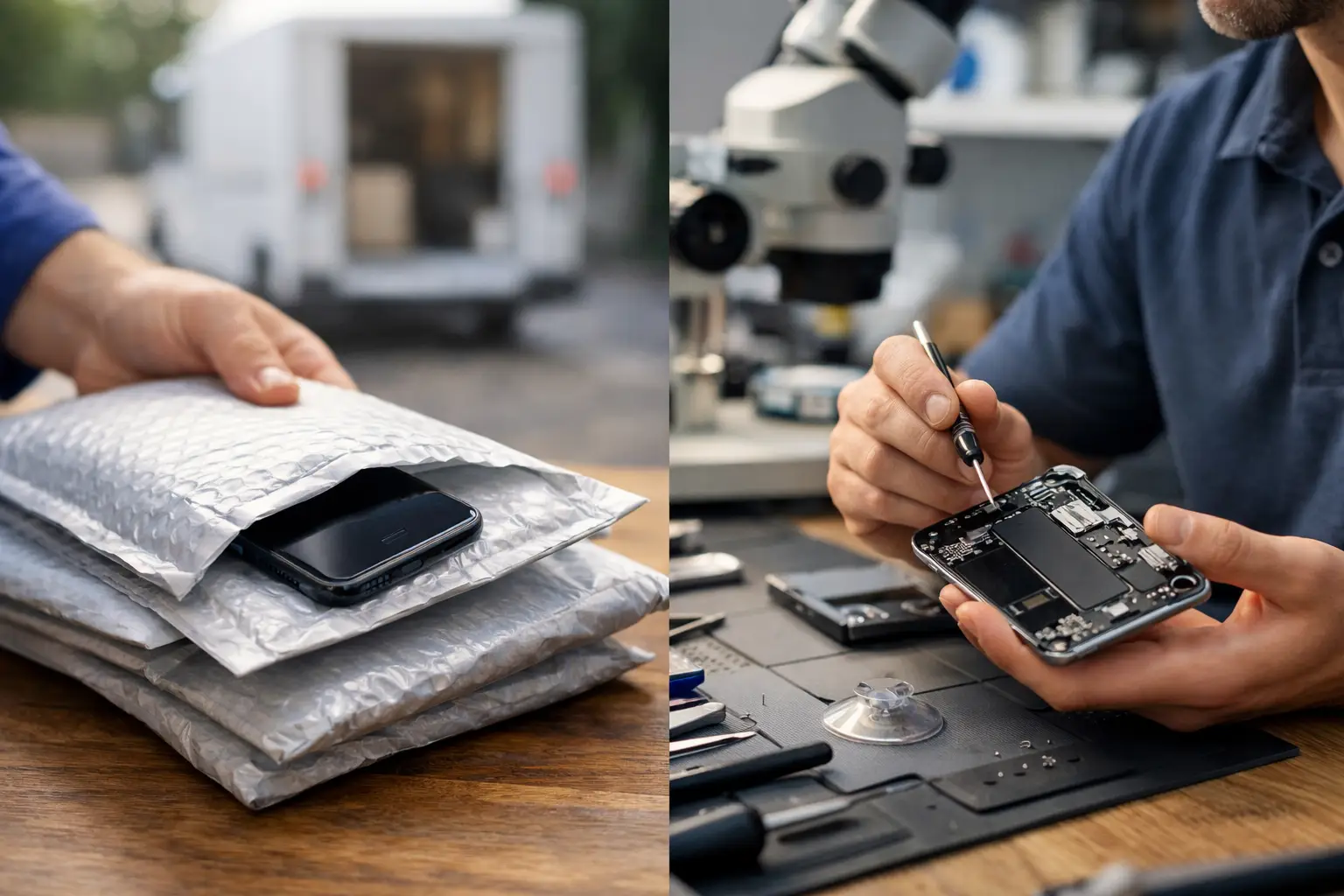
A cracked phone screen at 9 a.m. feels very different when you need that phone for work by lunch. That is where the real mail in vs local repair debate starts – not with theory, but with how long you can actually afford to be without your device.
For some repairs, mailing a device out makes sense. For many people, though, local repair wins because the problem is urgent, the device is essential, and waiting several days is not realistic. If you are trying to decide between the two, the right choice usually comes down to five things: turnaround time, total cost, risk, repair complexity, and how much convenience matters to you.
Mail in vs local repair: the real difference
On paper, both options solve the same problem. You hand over a broken phone, tablet, laptop, or game console, and a technician fixes it. In practice, the experience is completely different.
Mail-in repair is built around shipping. You send the device out, wait for it to arrive, wait for diagnosis, approve the work, then wait again for return shipping. Even when the actual repair is quick, the overall timeline usually is not.
Local repair is built around access. You bring the device to a nearby shop, get an in-person diagnosis, and in many cases get it back the same day. For common issues like cracked screens, battery replacements, charging problems, or console HDMI repairs, that speed can be the deciding factor.
That does not mean local is always better. It means the better option depends on what failed and how badly you need the device back.
Speed usually decides it
If your phone is your alarm clock, camera, GPS, payment method, and work line, losing it for a week is a bigger problem than most people expect. That is why speed matters more than people think when comparing mail in vs local repair.
Mail-in repair often sounds efficient because the company may advertise a one-day or two-day bench time. But bench time is not the same as total turnaround. Shipping out, processing, repair queue, return shipment, and possible delays can stretch the process far beyond the repair itself.
A local shop can often diagnose the issue while you are there. For straightforward repairs, that means you may be back up and running in 30 minutes to a few hours instead of several days. If you are dealing with a shattered screen, weak battery, bad charging port, or a game console that suddenly stopped displaying, that time difference matters.
For business owners and busy families, it matters even more. Downtime is expensive, even when the repair is not.
Cost is not always what it seems
A lot of people assume mail-in repair is cheaper. Sometimes it is. Sometimes it only looks cheaper until everything is added up.
Shipping is one factor. Even if the company covers part of it, insured shipping for an expensive device is not nothing. Then there is packaging, processing time, and the possibility of extra charges after diagnosis. Some mail-in services advertise a starting price that changes once the device is opened.
Local repair can be more transparent because you can ask questions face to face before handing over the device. You can compare turnaround times, parts quality, and warranty terms without guessing what happens after you ship your phone across the country.
The bigger hidden cost, though, is being without the device. If you need to borrow another phone, miss work calls, lose access to two-factor authentication, or buy a temporary replacement, the cheapest repair quote may not actually be the lowest-cost option.
Risk changes when shipping is involved
Every repair has some level of risk. Shipping adds another layer.
When you mail in a device, you are trusting carriers, packaging, tracking, and transit conditions before the repair even begins. Most shipments go fine. Some do not. Devices get delayed, boxes get damaged, and occasionally things disappear altogether. If your device already has severe damage, shipping can also make fragile problems worse.
A local repair avoids most of that. You hand the device directly to the technician or service desk. There is less chain-of-custody confusion and fewer opportunities for something to happen between you and the person fixing it.
There is also the data issue. Phones, tablets, and laptops hold personal photos, messages, work accounts, banking apps, and passwords. Some customers are simply more comfortable leaving that kind of device with a local shop where they can ask direct questions about handling, privacy, and repair process.
Some repairs are better suited to local service
Not every repair needs to leave town.
Common jobs like screen replacement, battery replacement, charging port repair, camera repair, speaker issues, button failures, and many console problems are usually strong candidates for local service. These are the repairs where speed and convenience tend to matter most, and where established shops often already stock the needed parts.
Water damage is another good example. Time matters. The longer corrosion sits, the worse the outcome can be. Mailing a water-damaged phone or laptop may lose valuable time that could have made the difference between a repair and a total loss.
The same goes for devices with intermittent power issues, no signal, failed ports, or board-level faults. A capable local shop with microsoldering experience may be able to diagnose and resolve the issue faster than a mail-in process that starts with shipping delays.
That said, there are exceptions. If your device is unusually rare, under a specific manufacturer program, or needs a highly specialized part that local shops do not keep, mail-in repair may be the more realistic path.
When mail-in repair makes sense
Mail-in repair is not a bad option. It just fits a narrower set of situations.
If you live far from a reputable repair shop, mailing your device out may be the best choice available. The same is true if the repair requires a very specialized lab or niche parts source that local providers do not offer.
Mail-in can also work well when the device is not mission-critical. Maybe it is an old tablet, a backup phone, or a game console you can live without for a week or two. In those cases, the slower timeline may be perfectly fine.
And some customers simply prefer to handle everything remotely. If convenience means scheduling from home and avoiding a trip, mail-in has a place.
The key is to be honest about your tolerance for delays, uncertainty, and being without the device.
What to ask before choosing either option
The best repair choice is usually the one with the clearest answers.
Ask how long the full process takes, not just the repair itself. Ask what warranty is included and whether it covers parts and labor. Ask whether the quote is firm or subject to change after inspection. Ask about data handling, parts quality, and what happens if the repair uncovers additional damage.
If you are considering local repair, ask whether the part is in stock and whether same-day service is realistic for your model. If you are considering mail-in, ask about insured shipping, approval timelines, and how return delays are handled.
Good shops do not get vague when you ask direct questions. They get clearer.
Why local repair often wins for everyday devices
For most people, phones and laptops are not optional devices. They are daily infrastructure. That changes the calculation.
A local shop gives you faster answers, faster service, and fewer variables. You can walk in with a broken device and often leave with a working one the same day. That is hard to beat when the problem is urgent.
It also gives you accountability. You know where the repair is happening. You can talk to someone in real time. You can compare the repair cost against replacing the device without spending days waiting on logistics.
That is one reason so many customers in Warner Robins and across Middle Georgia choose local service first. Shops like Reboot Hub have built their reputation around that reality – fast turnaround, fair pricing, certified technicians, and warranty-backed repairs that get people back to normal quickly.
The better option depends on your downtime tolerance
If you can comfortably box up your device, ship it out, and wait, mail-in repair may work just fine. If you need your device back today or as close to today as possible, local repair is usually the smarter move.
Most customers are not really choosing between two repair methods. They are choosing between days of downtime and a faster path back to work, school, family, and normal life. Start there, and the right answer gets a lot easier.
When your device breaks, do not just ask who can fix it. Ask who can get you back up and running without turning one problem into a week of inconvenience.