
A phone that will not charge, keeps losing signal, restarts without warning, or stays dead after a screen replacement may have a board-level problem. This complete guide to phone board repair explains what that means, how technicians find the fault, and when a fast repair makes more sense than replacing the device.
Your phone’s logic board, also called the motherboard, is the command center behind nearly every function you use. It manages power, charging, cameras, Wi-Fi, cellular service, Face ID or fingerprint features, audio, and data storage. When one tiny component or connection fails, the symptom can look much larger than the actual damage.
What Phone Board Repair Actually Means
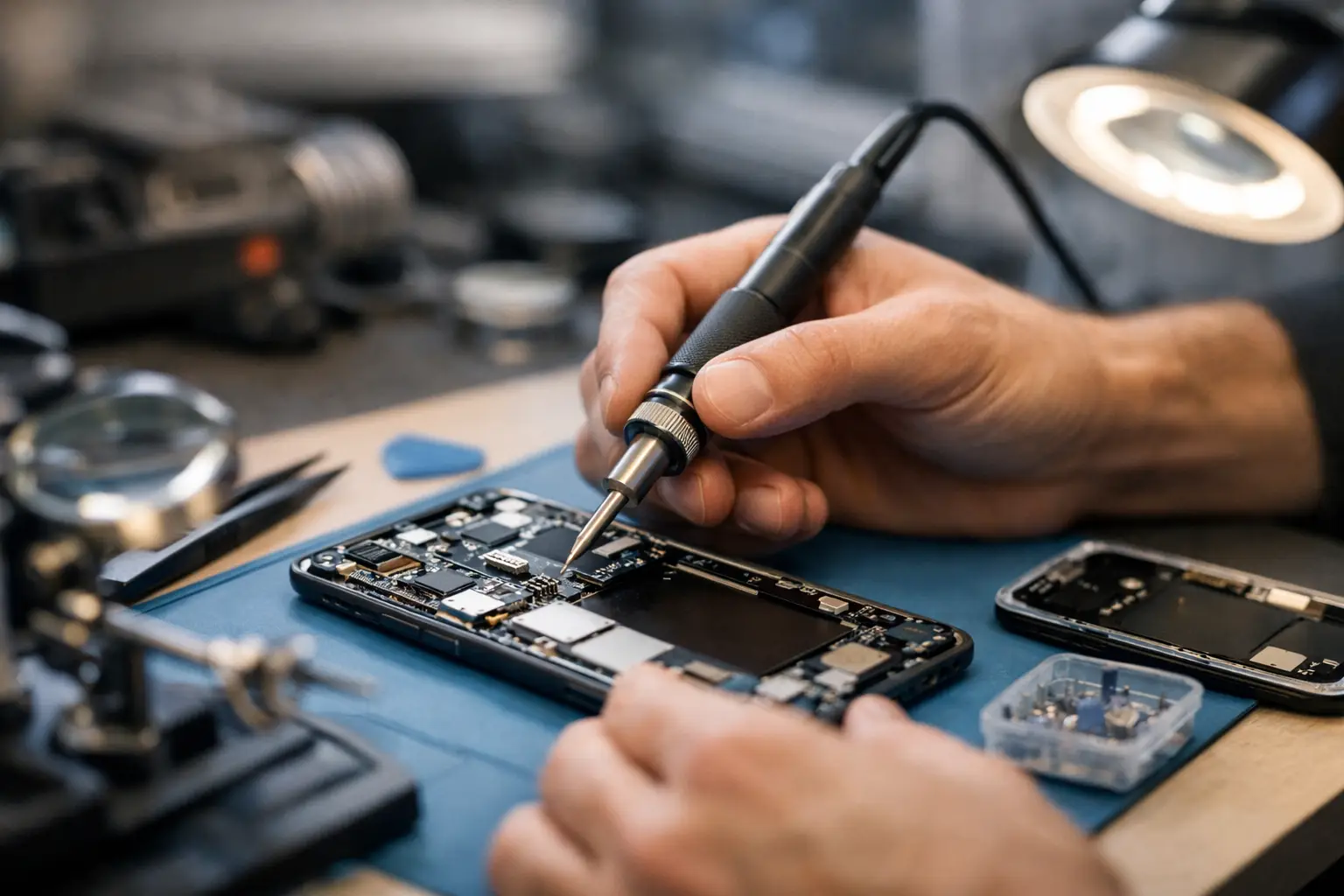
Board repair is not the same as replacing a cracked screen, weak battery, or charging port assembly. Those are common component repairs. Board-level repair involves diagnosing and repairing the circuit board inside the phone, often under a microscope.
A certified technician may need to replace a damaged chip, rebuild a torn solder pad, repair a corroded circuit, or reconnect a component that has separated from the board. These repairs require specialized tools, steady hands, and accurate diagnostics. Guessing at the problem can waste money and put your data at greater risk.
The good news is that many board failures are repairable. A phone does not automatically become junk because it will not power on or because a previous shop said the issue was “the motherboard.” The right answer depends on the model, the type of damage, the value of the phone, and whether the data matters to you.
Signs You May Need Phone Board Repair
A board problem often shows up after a hard drop, water exposure, overheating, a bad charging cable, or a failed repair attempt. It can also develop with no obvious accident when a chip or power circuit simply wears out.
Common warning signs include:
- The phone will not turn on, even with a known-good charger and battery.
- It charges inconsistently, gets hot near the camera or charging port, or shows no charge at all.
- Cellular signal, Wi-Fi, Bluetooth, GPS, cameras, speakers, or microphones stop working without visible damage.
- The phone is stuck in a boot loop, freezes at the logo, or restarts repeatedly.
- Face ID, fingerprint recognition, touch response, or a specific camera fails after a drop or water exposure.
One symptom does not always equal a board failure. A dead phone may only need a battery. “No service” may be a damaged antenna cable or SIM issue. That is why a real diagnosis comes before a repair quote. Fast service is valuable, but fast guessing is not.
Water Damage Is a Board Problem Until Proven Otherwise
Water damage deserves quick attention because corrosion continues after the outside of the phone feels dry. Minerals in water can create tiny electrical bridges, eat away at connections, and cause a phone to fail days or weeks later.
Do not put a wet phone in rice. Rice does not remove corrosion from the board, and powering the device on can worsen a short. Turn it off if possible, do not charge it, and bring it in for a professional diagnostic as soon as you can. A technician can open the phone, assess the damage, clean affected areas, and determine whether microsoldering is needed.
How a Phone Board Repair Diagnosis Works
A quality board repair starts with the symptom, but it does not stop there. Technicians inspect the device for impact marks, liquid indicators, bent frames, missing shields, and signs of prior repair. They test charging behavior, power draw, communication functions, and key parts that could mimic a board problem.
For deeper faults, the device may be tested with a bench power supply and inspected under a microscope. This helps isolate issues such as a shorted capacitor, failed charging circuit, damaged display connector, broken audio line, or corroded power component. On some phones, thermal imaging or other diagnostic equipment can help locate a part that is drawing abnormal power.
The goal is not to replace parts until something works. The goal is to identify the failed circuit and repair only what the device needs. That approach can protect your budget and prevent unnecessary replacement of a phone that may still have years of useful life.
Common Board-Level Repairs
The exact repair depends on the phone and the failed circuit. Modern iPhones, Samsung Galaxy phones, Google Pixel devices, and other Android phones use tightly packed boards with model-specific designs. A repair that is possible on one model may not be practical on another.
Charging circuit repair is common when a phone will not charge despite a good port, cable, and battery. Audio circuit repair can address problems such as no microphone function during calls, failed speaker output, or voice memo issues. Signal and connectivity repairs may involve damaged antenna connections, Wi-Fi circuits, or cellular-related components.
Data recovery is another reason board repair matters. If irreplaceable photos, messages, business files, or authentication information are locked inside a phone that will not power on, repairing the original board may be the only practical path to accessing that data. A simple device swap cannot move encrypted data from a dead board to another phone.
When Repair Makes Sense and When Replacement Is Better
A board repair is usually worth considering when the phone is relatively current, otherwise in good condition, or contains data you cannot replace. It can also be the better value when the failure is isolated and the repair costs far less than purchasing a comparable replacement device.
Replacement may make more sense if the phone has severe water damage, a badly bent frame, multiple failing components, or an older model with limited software support. If the repair cost approaches the value of a reliable replacement, a good shop should say so plainly. Fair advice matters more than forcing a repair that does not make financial sense.
Before approving work, ask what issue was found, whether the repair is expected to restore all functions, how long the repair should take, and what warranty applies. Board-level work can be more involved than a screen repair, but many issues can still be diagnosed and completed far faster than mailing your phone away or waiting on a manufacturer replacement.
Why DIY Board Repair Usually Costs More
Watching a short video can make microsoldering look simple. It is not. Phone boards contain tiny components, layered circuits, heat-sensitive chips, and connectors that can be damaged by one wrong temperature setting or one misplaced tool.
Using a heat gun without the right equipment can melt nearby parts, shift components, or damage the board beyond economical repair. Random replacement parts can also hide the real problem. If your phone is boot looping, overheating, or has no signal after a drop, avoid repeated charging attempts and let a technician diagnose it before the damage spreads.
Choose a Shop That Can Handle the Whole Problem
Many repair stores can replace a screen or battery. Fewer can diagnose a true board failure and perform advanced microsoldering. Look for a shop that explains the issue in plain language, gives you a clear price before work begins, and stands behind the repair.
For customers around Warner Robins and Middle Georgia, Reboot Hub offers fast device diagnostics, board-level microsoldering, a Low Price Guarantee, and warranty-backed repairs from certified technicians. With more than 50,000 repairs completed since 2011, the focus is simple: find the real fault, fix it fast when it makes sense, and avoid pushing you into a replacement you do not need.
If your phone has stopped charging, lost signal, or gone dark after a drop or water exposure, keep it powered off when possible and bring it in before a small board issue becomes a full device loss.